Egypt property title verification for foreign buyers: chain-of-title checks, seller authority review, developer-file risks, and registration readiness under Egyptian law
Due Diligence • Title Verification

Egypt Property Title Verification

A practical written verification before you pay—confirm chain of title, seller authority, and execution risk under Egyptian law.

  • Chain-of-title review to spot gaps, restrictions, and document inconsistencies
  • Seller authority and developer-file checks to reduce dual-sale and handover risk
  • Outputs: a concise risk memo + next-step route plan (scope-based)

Typical turnaround: 48–72 hours (urgent option available) for an Egypt property title verification. Scope: Egyptian law only. Egypt-side procedural steps are handled through the lawyers the company cooperates with in Egypt.

Egypt Property Title Verification

Many buyers believe the file is “safe” once a sale contract is signed. In practice, risk usually sits in the gaps: missing links in the chain of title, unclear seller authority, developer-file inconsistencies, or handover and possession evidence that cannot be verified when challenged.

This page clarifies a common confusion: a contract can matter commercially, but it is not the same as protected title against third parties. We separate the outcomes of Sahha Tawqi’ (signature validity), Sihha wa Nafaz (validity and enforceability), and what property registration in Egypt is designed to achieve in real terms—priority and protection of ownership against competing claims.

The core objective here is due diligence before commitments become expensive. A structured Egypt property title verification helps you decide what to request, what to verify, and what to stop for—so the next step you choose is supported by evidence, not assumptions.

Deliverable (on request): a concise written risk memo with a red-flag map, a document checklist, and a route plan aligned to your goal (ownership security, enforceability, or registration readiness).

Scope note: Guidance is limited strictly to Egyptian law. Egypt-side procedural steps are handled through the lawyers the company cooperates with in Egypt.

Contract Not Title

A signed sale contract can prove agreement, but it does not automatically create protected ownership against third parties. In disputes, priority and protection depend on the strength of the title chain, the seller’s verified authority, and whether the file can stand up to challenge.

Problems usually come from missing links in chain of title, contradictory paperwork, developer-file gaps, or handover and possession evidence that cannot be verified later. These issues often surface after payment, when fixing the file becomes slower and more expensive.

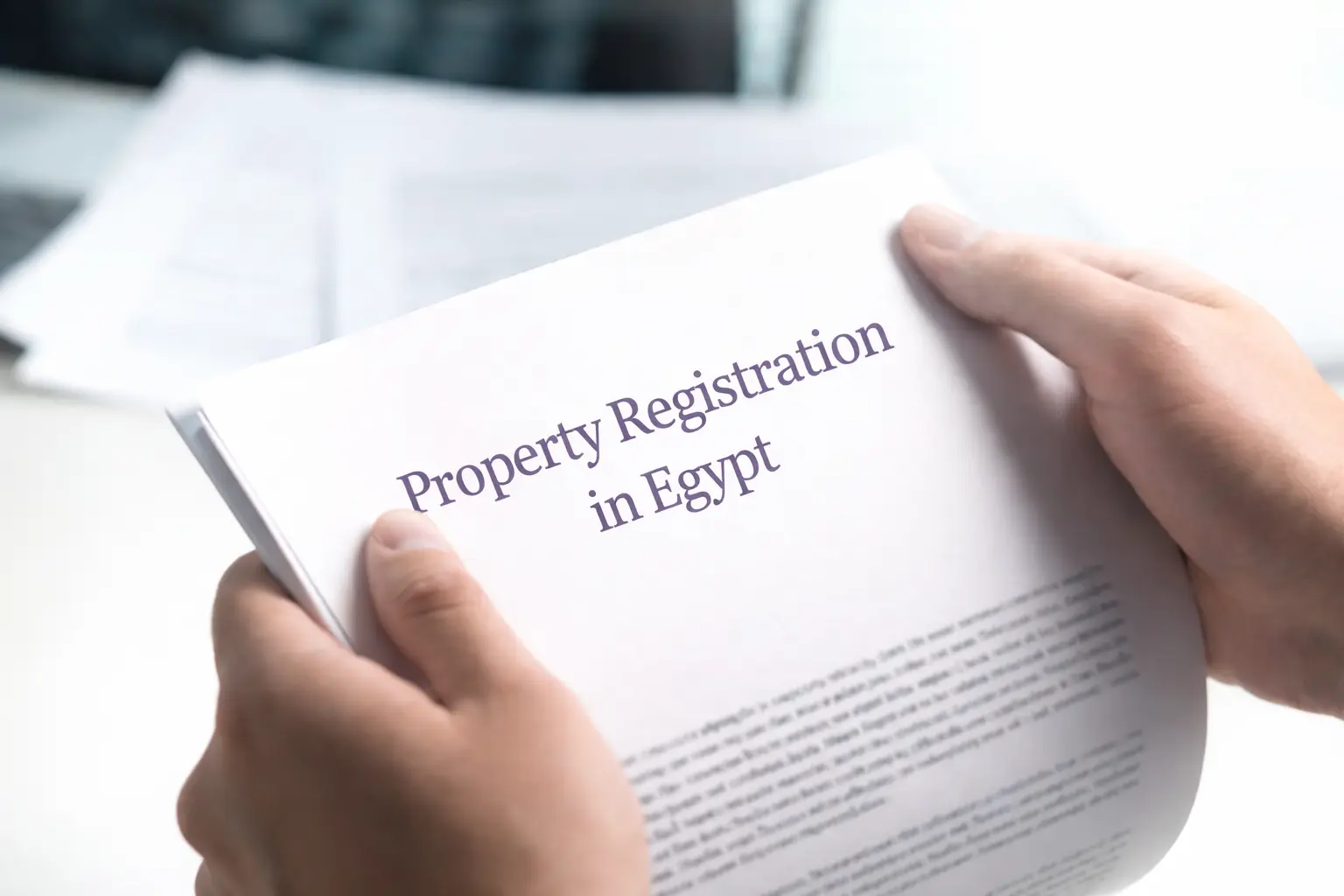
Property registration pathway illustration for foreign buyers in Egypt

This is why Egypt property title verification matters before commitments become irreversible: it tests the file for weaknesses, clarifies what evidence must be collected now, and keeps the next step aligned to your objective (enforceability, ownership security, or registration readiness).

Registration Protects Ownership

Registration is the protection layer that upgrades a buyer’s position from “paper between two parties” to a defensible ownership claim in practice. When competing rights, priority claims, or contradictory paperwork appear, registration is often the dividing line between control and vulnerability.

This is why Egypt property title verification matters before payment decisions become irreversible. It tests whether the file can realistically reach a registration-ready position by checking the chain of title, seller authority, document sequence, and the evidence required to defend the file if challenged.

Registration should be treated as a planned outcome from day one. Egypt property title verification should run in parallel with contract drafting, payment triggers, and documented handover/possession evidence—so the file stays aligned with a protected end-result. If the file cannot reach that outcome, the risk should be treated as material, especially for long-term holding or future resale.

Title Review Checklist

Send what you have. This checklist helps structure the file early and spot red flags before payment decisions become expensive.

Documents checklist

  • Seller authority: ID + POA / signatory proof (if applicable).
  • Title chain: prior contracts / registered references (where available).
  • Unit identity: unit number, floor, project, exact location.
  • Payment evidence: receipts, transfers, instalments schedule.
  • Handover proof: keys/minutes, utilities, possession indicators.
  • Arabic controls: ensure Arabic terms match the intended deal.

Red flags (stop & re-check)

  • Rush to pay before verifying the file.
  • Unclear seller capacity (POA/company authority not proven).
  • Conflicting property details across documents.
  • “We’ll provide later” title chain promises.
  • Late amendments or handwritten changes.
  • Multiple parties giving different ownership stories.

Dual Sale Priority Risk

When the same unit is sold twice, disputes become a question of priority, not fairness. In practice, priority is often shaped by what can be proven: seller authority, defensible possession, and movement toward the strongest route that protects ownership against third parties.

A buyer who delays property registration in Egypt can lose practical priority to another buyer who registers earlier—even where the first buyer signed earlier. The file is tested under conflict, and weak evidence turns “a signed contract” into a fragile position.
SEO keyword summary panel for the property registration guide in Egypt

This is why Egypt property title verification should happen before payment triggers are exhausted. It checks whether the seller can lawfully transfer, whether the chain of title is consistent, and whether the documents can support a registration-ready outcome if the file is challenged later.

The practical safeguard is evidence discipline: secure and document handover/possession, keep clean payment proof, and avoid “we’ll provide later” promises on title history. Priority becomes defensible when the file is engineered early—before a dispute forces expensive repair.

Handover Before Registration

A practical point foreign buyers often overlook is delivery. Before moving to register the final sale contract, the buyer should receive actual handover after signing the final contract and paying the agreed price—consistent with the file plan and agreed payment triggers.

Handover should be documented, not assumed. A clear handover clause, dated delivery minutes, keys acknowledgement, and basic possession indicators (utilities, access, and occupancy evidence where relevant) help the file stay enforceable if the position is later challenged.

This is also a timing-control issue. If registration is delayed, documented handover strengthens the buyer’s practical position while the file moves toward the strongest feasible route, and it supports a cleaner Egypt property title verification when priority or conflicting paperwork appears.

Chain of Title Cannot Be Skipped

Registration is not a substitute for chain-of-title review. Egypt property title verification starts with evidence you can trace across the ownership chain, not assumptions based on sales momentum or marketing confidence.

Buyers should not assume a developer or broker has prioritised title integrity. In many market situations, sales move faster than legal verification. This creates a common risk: the unit is promoted confidently while the underlying ownership documentation is incomplete or inconsistent—making Egypt property title verification the step that separates comfort on paper from defensible ownership reality.

A controlled review tests continuity: who owned what, who could lawfully transfer, and whether the file can realistically reach a registration-ready position without hidden obstacles. Egypt property title verification protects long-term holding and future resale planning by identifying gaps early, before later steps fail under pressure.

Sahha Tawqi’ Fast, But Limited

Sahha Tawqi’ (signature validity) is a preliminary court route focused on confirming that the signatures on a sale contract are attributable to the signatories. It is typically proven by court appearance (or appearance of authorised agents) and admission of signature.

Procedurally, it can be relatively fast and is often used as an early step within Egypt property title verification when the immediate goal is to reduce denial-of-signature risk and stabilise the contract as evidence.

Its scope remains limited. It does not investigate the seller’s ownership, it does not verify chain-of-title, and it does not itself transfer ownership. Buyers should treat it as an initial protective measure—not a substitute for registration planning or a full due diligence review.

Sihha wa Nafaz The Stronger Contract Route

Sihha wa Nafaz (validity and enforceability) is generally a stronger court route for property sale contracts than signature-only confirmation. The objective is not just to confirm a signature, but to support enforceability through a file that can withstand challenge.

The process typically involves an on-ground survey component: inspection, measured drawings, and a croquis/plan that supports the unit description. The court also looks at the ownership movement across the chain and whether the contract meets the legal form required for enforceability.

Where the file is properly structured and the defendant position is handled correctly, the court may rule that the sale contract is valid and enforceable. This can become an important step toward registration readiness, depending on the property type and the administrative requirements that apply to the file.

Which Route Fits Your Objective?

Route selection depends on the outcome you need. If the objective is long-term personal ownership with strong legal security, the file should be engineered toward a defensible, registration-ready position supported by verified authority and a clean chain of title.

If the objective is investment with planned resale, the registration plan becomes even more critical. Future buyers often require clearer evidence and a more disciplined file, and delays or gaps can reduce liquidity and bargaining power later.

In practice, the correct approach is not “pick a lawsuit.” It is: define the objective, test the file, then select the route that produces the strongest, most usable outcome under Egyptian practice—guided by Egypt property title verification at the start of the file.

Title Verification

Confirm a defensible Egypt route
  • Send your scans and unit details.
  • Get a clear risk and route plan.
  • Move with evidence, not promises.

Practical Checks

Clear, execution-focused answers for foreign buyers—built around Egypt property title verification and the real checks that decide whether your file can move toward registration-ready protection, avoid priority risk, and hold up under dispute in Egyptian practice.

Begin with clarity

This guide is built for execution. We help run Egypt property title verification early—testing chain-of-title continuity, seller authority, and handover evidence—so your file stays aligned with a registration-ready outcome and a safer route to secure property title in Egypt.

Scope note: Guidance is limited strictly to Egyptian law. Egypt-side procedural steps are handled through the lawyers the company cooperates with in Egypt. Where needed, we map a clean sequence toward property registration in Egypt with clearer milestones, evidence triggers, and fewer surprises.


Trusted by Clients Worldwide

Real feedback from verified Google reviews worldwide.

Our clients value clear communication, accurate legal guidance, and consistent follow-through.
These reviews reflect real experiences from international clients who relied on structured, professional legal support related to Egypt.

Navigate Legal Matters with Confidence

We provide structured legal support focused exclusively on Egyptian law, assisting international clients and professionals with Egypt-related legal matters.

Contact Information

Company Information

Anglo-Nile International Legal Services Ltd. All rights reserved 2025 ©